A Conversation with Chef Asia Chirdo
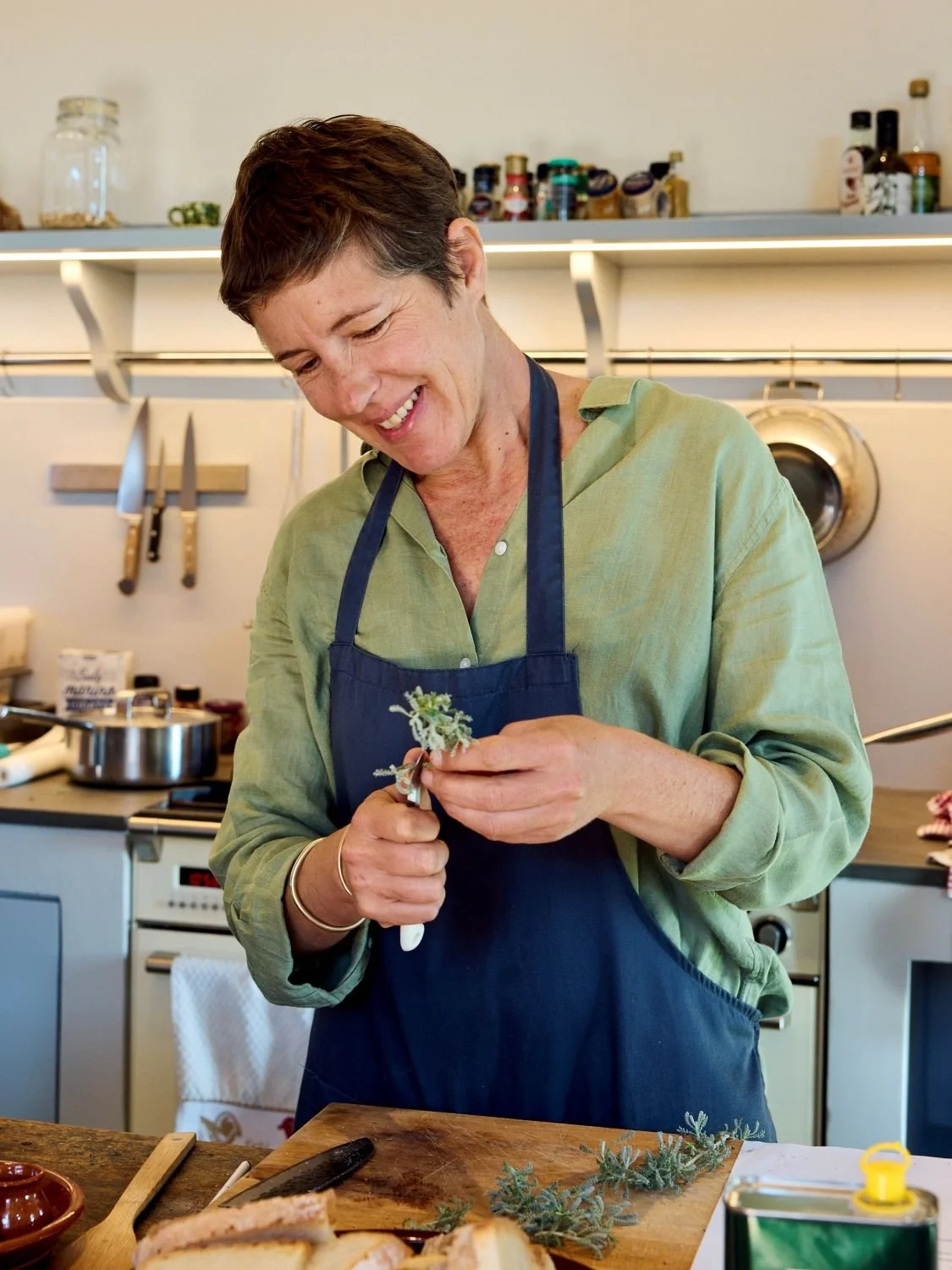
Private chef, Val d’Orsia, Italy
I first met Asia over breakfast with Antonella at the lovely Podere Trafonti, near Pienza in the Val d’Orcia. It was a rainy day in late spring, and we were enjoying a generous Tuscan breakfast of freshly baked bread and cakes, millefiori honey from Antonella’s beehives, pecorino from Podere Il Casale just down the road...I remember thinking how lucky I was to have found her to collaborate with for my clients.
Asia is exactly the kind of person I love to work with. She is thoughtful, creative and completely unpretentious. She is also incredibly passionate and talented, and that comes through so clearly in the way she cooks and interacts with my clients.
Her path to becoming a private chef feels very natural when you hear her story. Growing up between Puglia and Sicily, she was surrounded by strong food traditions and the women in her family. She later worked in professional kitchens, before choosing to step away from that world to focus on something more personal and more connected to the people she cooks for.
My clients always share glowing feedback about Asia’s cooking and the time they spend with her. She also offers cooking lessons where she teaches recipes and techniques that feel true to her cucina but are still accessible and easy to recreate at home. Her cooking reflects all the places she comes from and are always guided by what’s in season and available locally.
I’ve had moments with Asia where we’ve had to get a little creative behind the scenes…Like the time a villa owner insisted on using his own chef, and we half-joked about adding Asia to the guest list just to make it work. In the end, we didn’t need to, but she was completely open to it, whatever it takes. That kind of flexibility and partnership is rare.
For my clients, time spent with Asia is never just about the meal. It’s about being welcomed in, slowing down, and experiencing a more authentic side of Italy, slightly off the eaten path.
Her Journey and Influences
I always love creating tailor-made experiences for my clients with you. They leave inspired by your warmth and passion, and by the beauty and authenticity of your cooking. Tell me more about your journey—how did your path lead you here, and who or what has most influenced your style of cooking along the way?
My path to cooking has not been linear, but it has been inevitable. During my childhood, I grew up surrounded by the intense aromas of southern Italy, between Puglia and Sicily, where food is culture, identity, and sharing. My first teachers were the women in my family: skilled hands, repeated gestures, and a way of cooking based on instinct, respect, and attention to household economy. I worked in kitchens during my university years, and later chose to deepen my knowledge of the restaurant world through work experiences and gastronomic consulting, both in Italy and abroad.
What led you to step away from running your restaurant and move into the more personal world of private cooking and teaching?
Over what is now nearly 30 years of experience, my training and work in various restaurants gave me method and structure, but I always felt the need to return to something more intimate. It is precisely this desire that led me to leave traditional restaurant work and dedicate myself to a more personal approach: cooking for a few people, teaching, and sharing the experience closely with my guests.
The Choice of Val d’Orcia
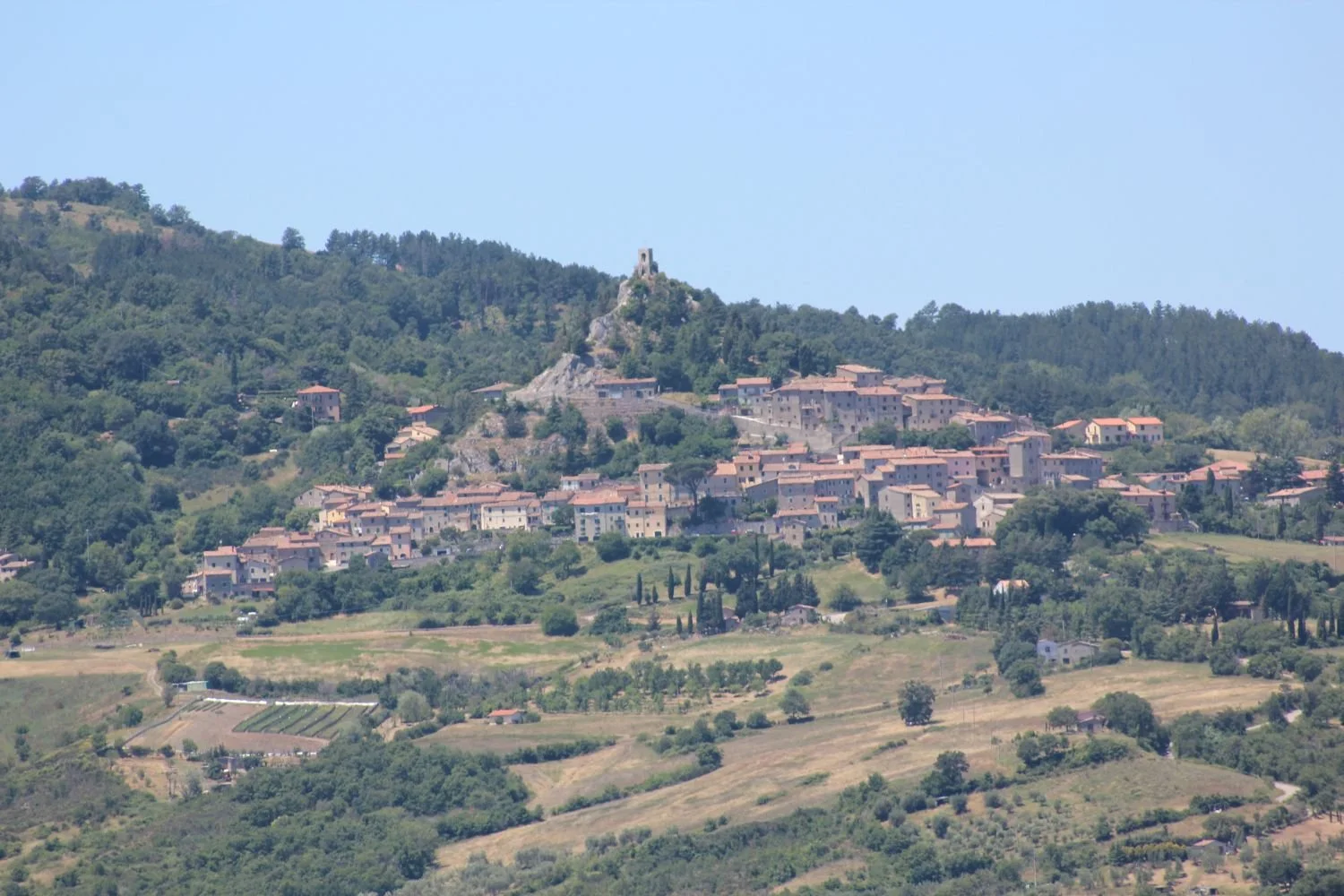
You are based in Campiglia d’Orcia, a charming medieval hilltop village perched above the stunning Val d’Orcia, a UNESCO World Heritage site. What drew you to this quieter corner of Tuscany, and what does it offer that more well-known areas of Tuscany perhaps don’t?
Moving to Campiglia d’Orcia, in the heart of the Val d’Orcia, was a life choice before it was a professional one. Here, time moves slowly.
It is a small village that has remained authentic, untouched by mass tourism, perched halfway up the mountain with a view that opens onto the valley’s horizon. In Campiglia, I never feel alone: I have found a welcoming community, made of simple and sincere gestures. I love cultivating small daily rituals—chatting at the bar, sharing a coffee with a neighbor—moments that give rhythm to my days and create a deep sense of belonging.
Three Souls in the Kitchen
Italian cooking is often misunderstood as one unified cuisine rather than a collection of deeply regional flavours, traditions, and rhythms, shaped by climate, landscapes, and what grows naturally. With your roots in Puglia and Sicily, and your life now in Tuscany—three regions with distinct and fascinating culinary identities—how have these influences come together to shape your cooking today?
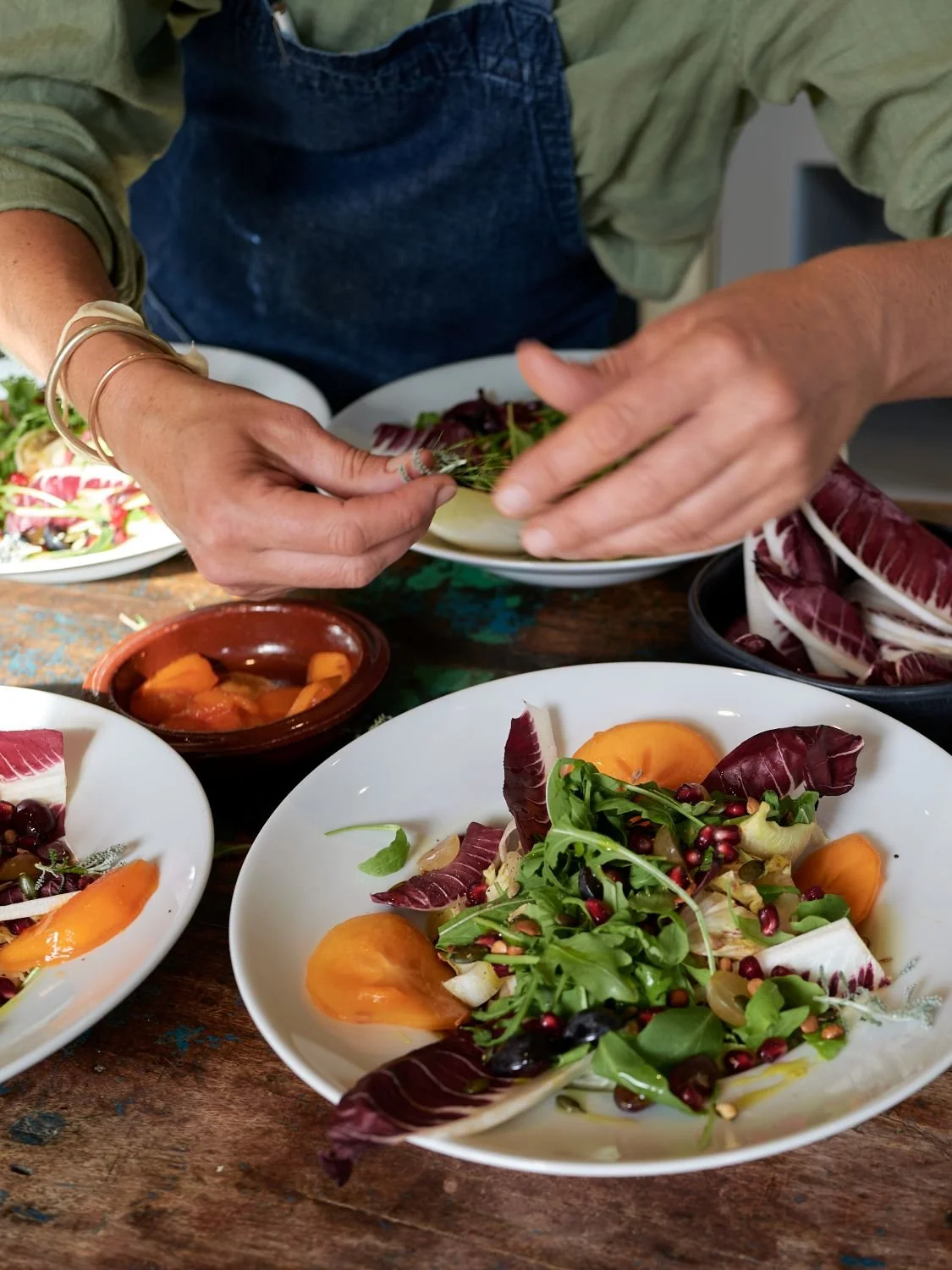
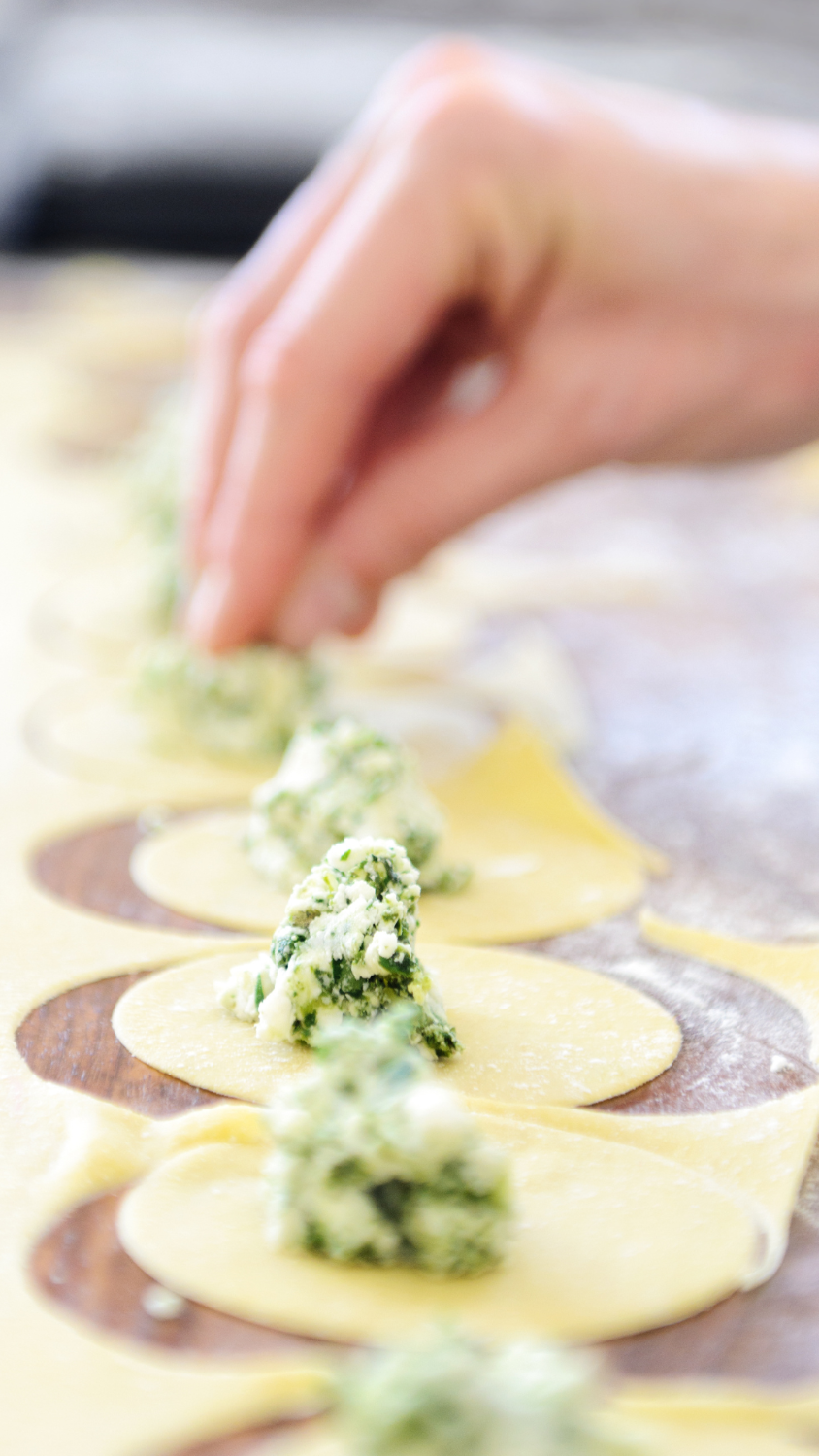
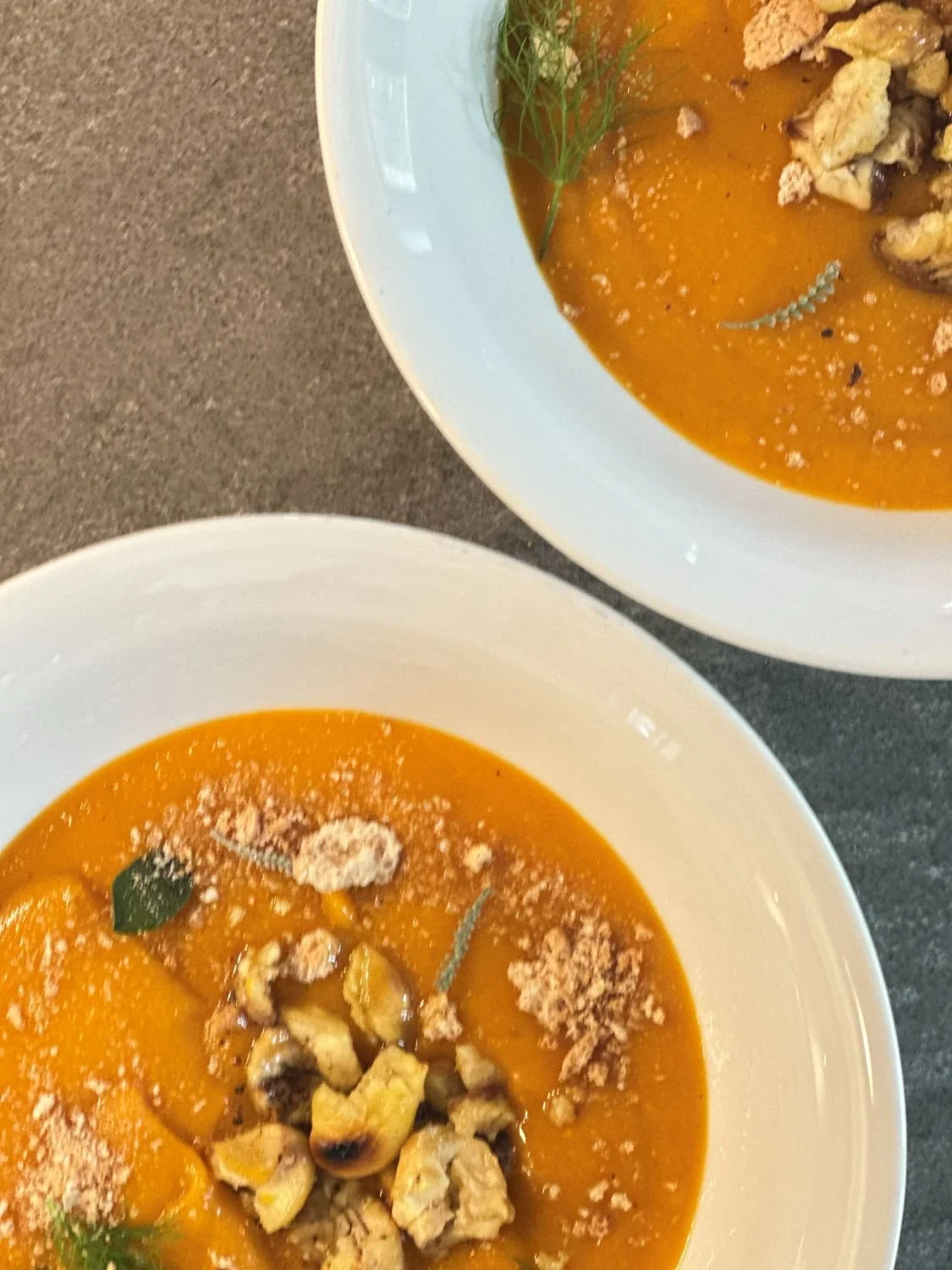
My southern roots and my life in Tuscany coexist in every dish. From Puglia, I bring a love for vegetables and extraordinary dairy products. From Sicily come contrasts, spices, and the layering of flavors from different parts of the world. Tuscany has taught me essentiality, a straightforward and decisive approach at the table: few ingredients, intense flavors that warm the heart.
The result is a personal cuisine that does not belong to a single region, but rather creates a dialogue between these identities.
Tradition and Interpretation
How do you interpret traditional Tuscan dishes in a way that still feels personal to you? Are there recipes or dishes you have adapted over time that feel uniquely yours today?
I never try to overturn Tuscan tradition, but rather to interpret it. Sometimes I lighten a preparation, or introduce an ingredient from the south.
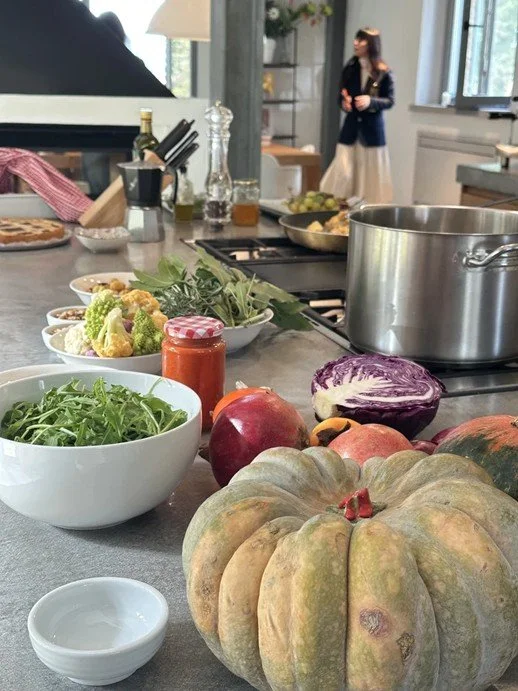
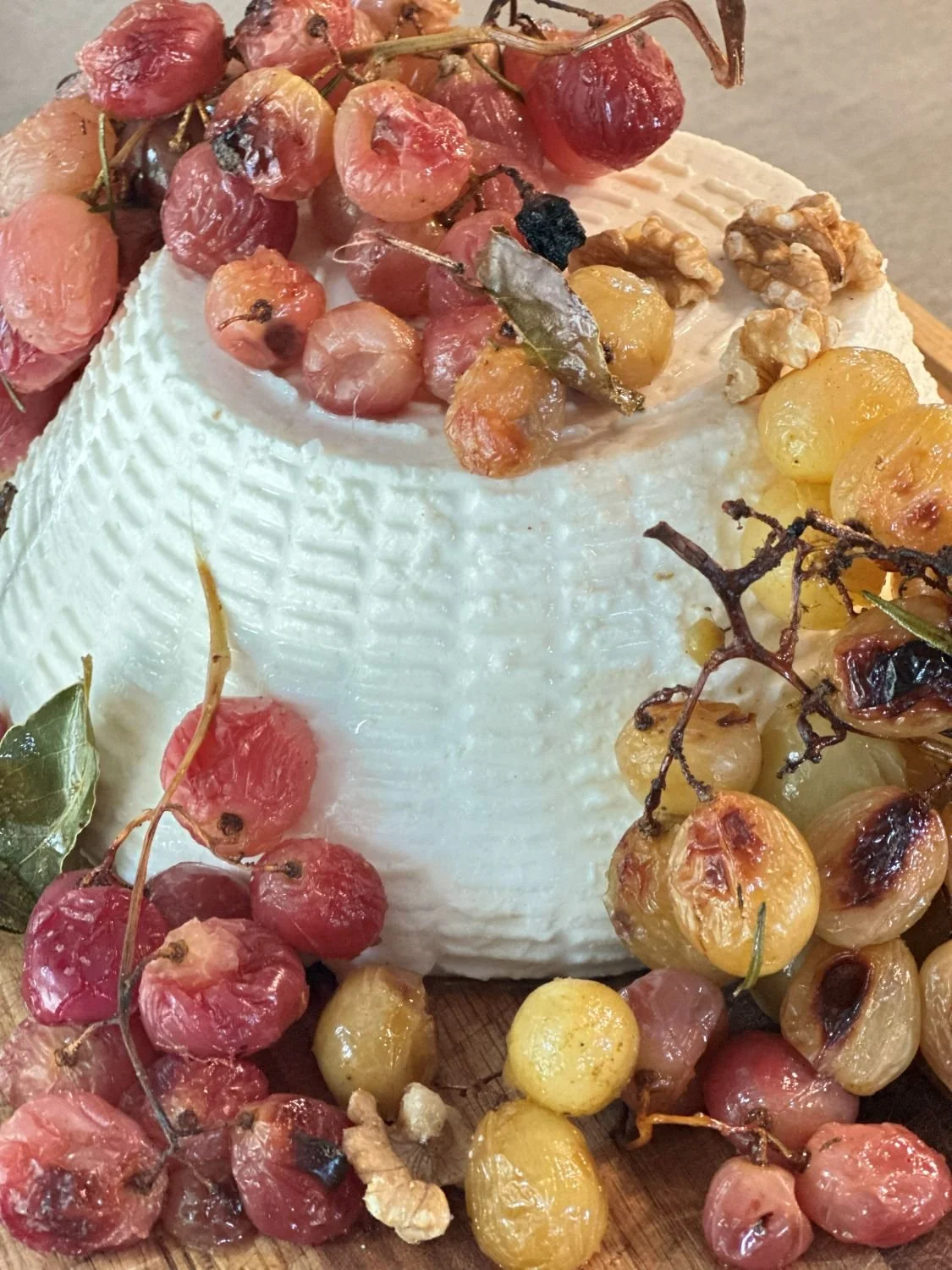
I am a lover of “small plates” much more than the classic division into starter, first course, and main course. I like the idea of a lively, colorful table made of small tastings, different flavors, and textures. Miniature dishes based on a few ingredients, designed to be shared, to play, to pause, to chat, and to enjoy—allowing the meal to become a free and relaxed experience.
Seasonality and Inspiration
Your cooking is deeply rooted in seasonality and locally-sourced ingredients. How does what’s growing around you shape the way you create your menus and is there a particular season in Tuscany that inspires you most?
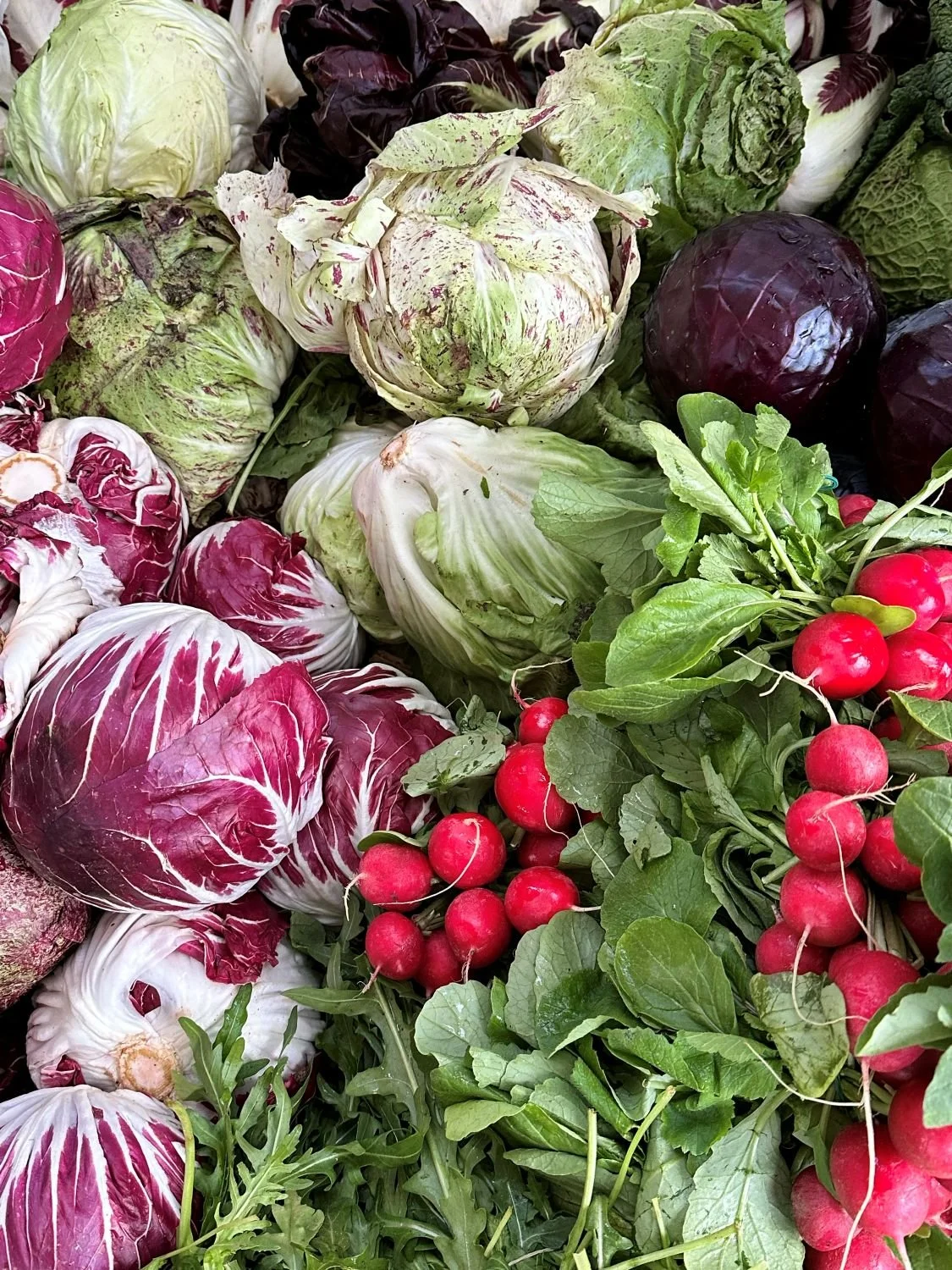
Seasonality is the starting point of everything. The menu is born from what I find: the garden, the market, the woods. In spring, I love the rebirth of wild herbs. It is my favorite season, full of colors ranging from countless shades of green on the table, and fresh, herbaceous, and floral aromas that tell the story of nature’s renewal.
The Value of Small Producers
You work closely with small local producers. What challenges do you see them facing today, and why is it so important to support them?
Working with small local producers means choosing quality, but also responsibility. Today they face enormous challenges: climate change, rising costs, and competition from large-scale distribution. Supporting them is not only an ethical choice, but a way to preserve biodiversity, traditions, and territories. Visiting them directly at their farms is one of the activities I love most: it allows me to know the people behind each product, but also to truly understand the raw ingredients and how to treat them with awareness.
The Wine Project
You’ve created your own wine in collaboration with a winemaker. What inspired you to begin this project, and how has the process shaped the way you think about wine alongside you cooking? Who are some of your favorite Italian winemakers?
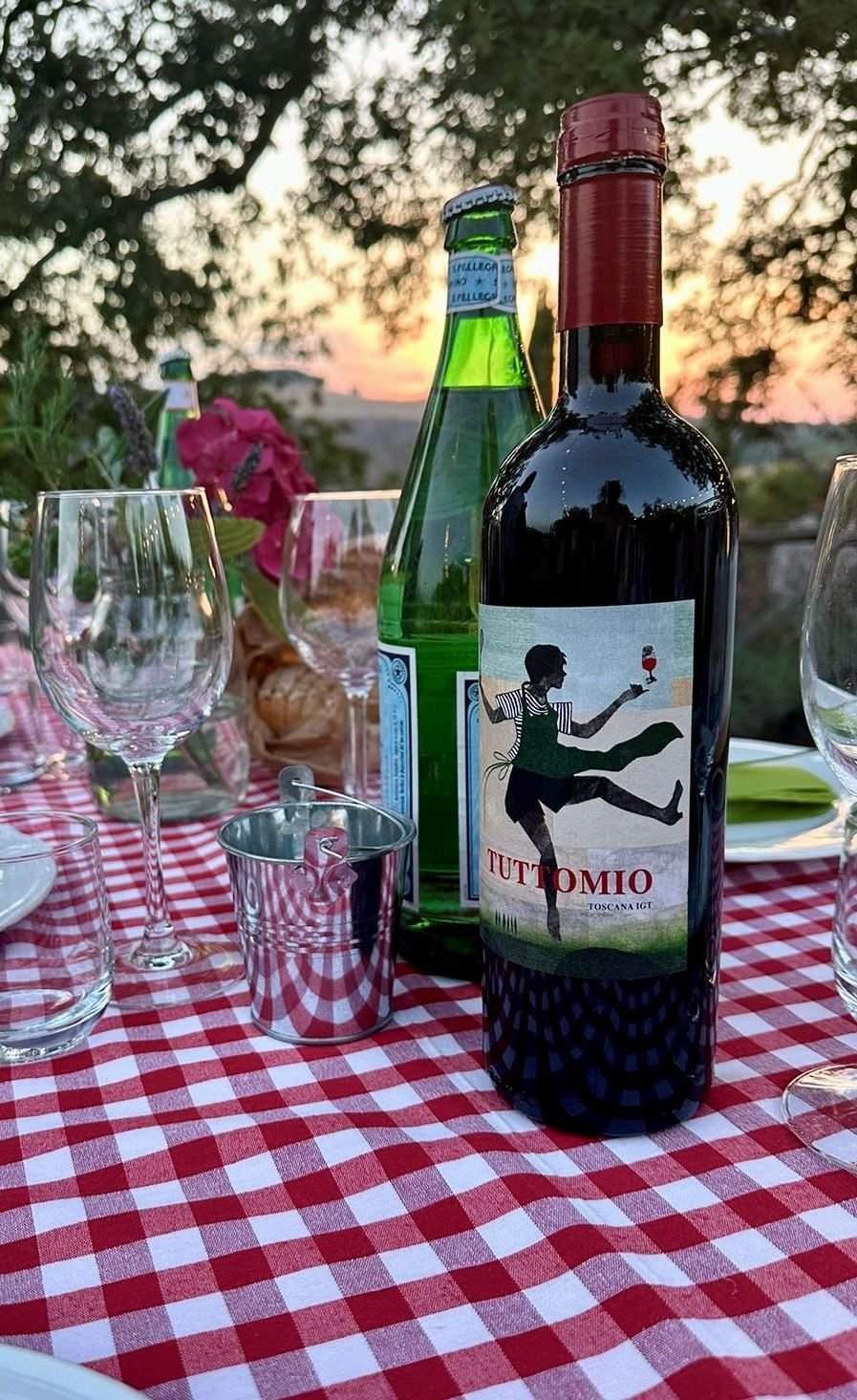
Creating a wine together with a producer I love, Le Bertille, was a natural step. I wanted something in the glass that spoke the same language as my dishes. Tuttomio is a sincere, honest, direct, and approachable wine. This project has taught me a great deal: time and patience.
Wines Close to My Heart
Who are some of your favorite Italian winemakers?
The wineries I feel most connected to in the area where I live (made first and foremost of people rather than labels) are three:
Il Macchione: wines distinguished by elegance, expressing the Montepulciano territory with respect and authenticity. (https://www.podereilmacchione.it/index.php)
Campotondo: I just have to step outside my house and see Paolo heading to the vineyard on his tractor to know what I will find in the glass—authenticity and character. Campotondo is a small, family-run winery in Campiglia d’Orcia. https://www.cantinacampotondo.it/en/
Le Bertille. https://www.lebertille.com/
The Experience
You welcome guests into your kitchen and your world. What do you hope they take away from time spent with you in la cucina?
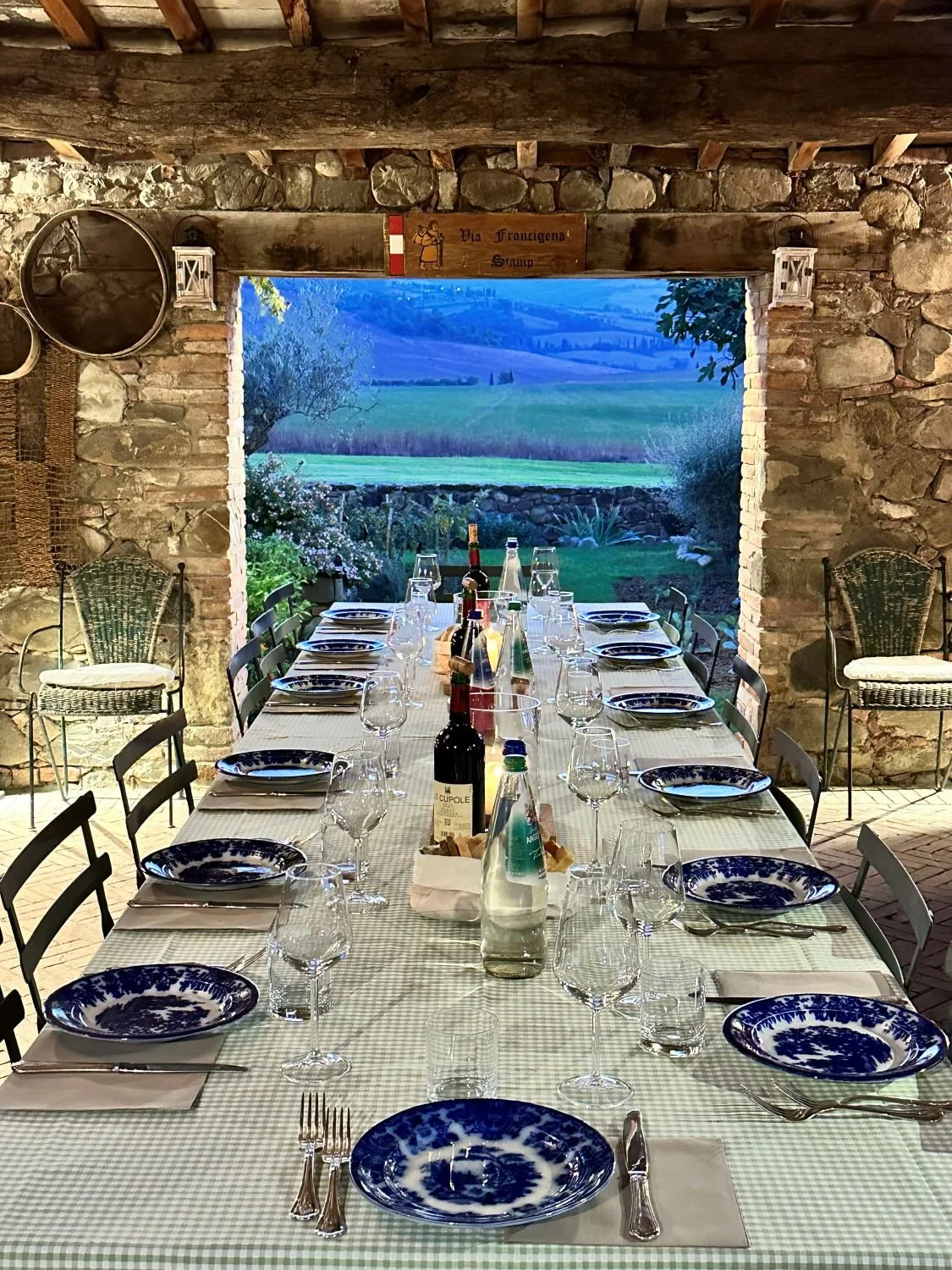
When I welcome guests, my desire is simple: to make them feel part of something. Not just to teach recipes, but to share a way of living food. I would like them to return home with new flavors, of course, but also with a different perspective, a new way of being together and sharing time.
Typical of Asia’s generosity and love of sharing her food, she has shared two of her favourite classic Italian recipes for you to try at home. Thank you Asia!
Bruschetta with Stracciatella,
Roasted Tomatoes, and Anchovies
Ingredients (serves 4)
4 slices of rustic country bread
200 g fresh stracciatella
250 g cherry or datterini tomatoes
8 high-quality anchovy fillets in oil
1 garlic clove
Extra virgin olive oil, to taste
Salt and freshly ground black pepper
Fresh oregano
Method
1. Roasted Tomatoes
Preheat the oven to 180°C (350°F).
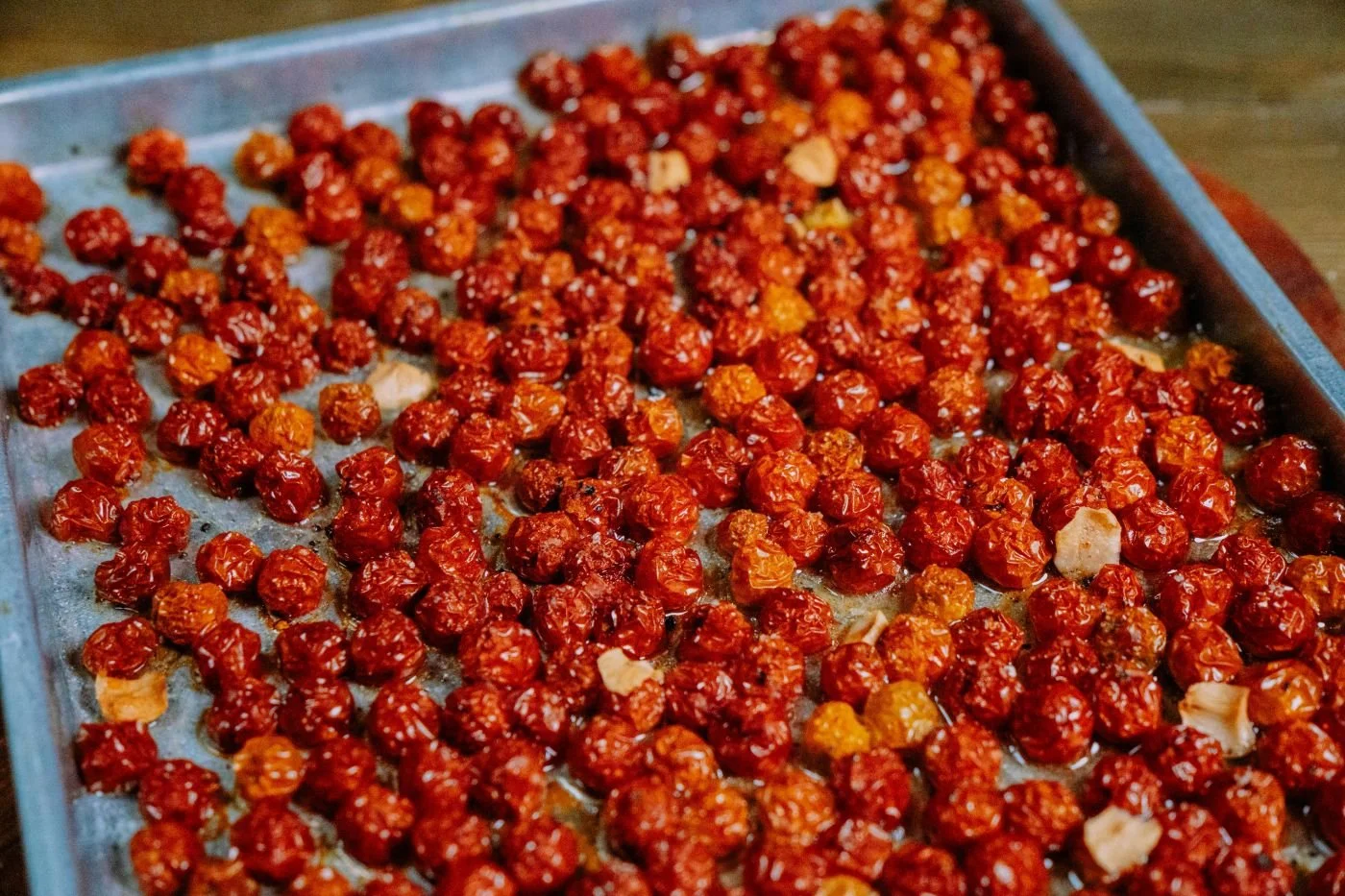
Cut the tomatoes in half and arrange them on a baking tray lined with parchment paper. Season with olive oil, salt, pepper, and herbs if using.
Roast for 25–30 minutes, until soft and lightly caramelized.2. Bread
Toast the bread slices on a grill or in the oven until crisp on the outside but still tender inside.
Lightly rub each slice with the garlic clove.3. Assembly
Spread a generous layer of stracciatella over the warm bread.
Top with the roasted tomatoes.
Arrange 1–2 anchovy fillets on each bruschetta.4. Finishing
Drizzle with extra virgin olive oil and finish with freshly ground black pepper.
Add a light grating of lemon zest if desired, for brightness.Granny’s Polpettone
(Classic Italian Meatloaf)
Ingredients (serves 4–6)
500 g ground beef (or a mix of beef and pork)
100 g stale bread
100 ml milk
1 egg
50 g grated Parmigiano Reggiano
2 tbsp chopped fresh parsley
1 garlic clove, finely minced
Salt and freshly ground black pepper
Extra virgin olive oil
1 glass dry white wine
80 g sliced mortadella or prosciutto
80 g cheese (provola), sliced
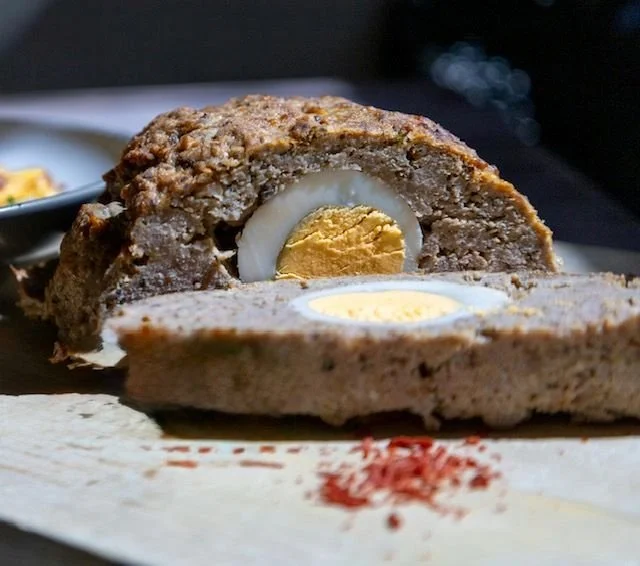
2 boiled eggs
Method
1. Prepare the mixture
Soak the stale bread in milk until soft, then squeeze out the excess.
In a large bowl, combine the ground meat, soaked bread, egg, Parmigiano, parsley, garlic, salt, and pepper.
Mix gently with your hands until soft and well combined.2. Shape and fill
Lay the mixture onto parchment paper and flatten it into a rectangle.
Arrange the mortadella (or prosciutto) and cheese evenly over the surface, then place the boiled eggs in a line at the center.
Carefully roll the meat over the filling, sealing it well and shaping it into a compact loaf.3. Cooking
Heat a generous drizzle of olive oil in a large pan and brown the polpettone on all sides until golden.
Add the white wine and let it evaporate.
Lower the heat, cover, and cook gently for 35–40 minutes, turning occasionally, until fully cooked through.
(Alternatively, bake in the oven at 180°C / 350°F for about 45 minutes.)4. Rest and serve
Let the polpettone rest for at least 10 minutes before slicing to keep it juicy and tender.